

A Wikipedia page is a milestone for many business owners. It indicates credibility, longevity and public relevance. But it’s not quite as simple as writing a biography and publishing it. Wikipedia has very strict guidelines on notability, neutrality, sourcing and conflicts of interest, and pages that fail to meet these standards are often rejected or deleted.
This guide takes entrepreneurs through the steps of creating a Wikipedia page that is built to these standards from the ground up.
Learn About Wikipedia's Notability Guidelines
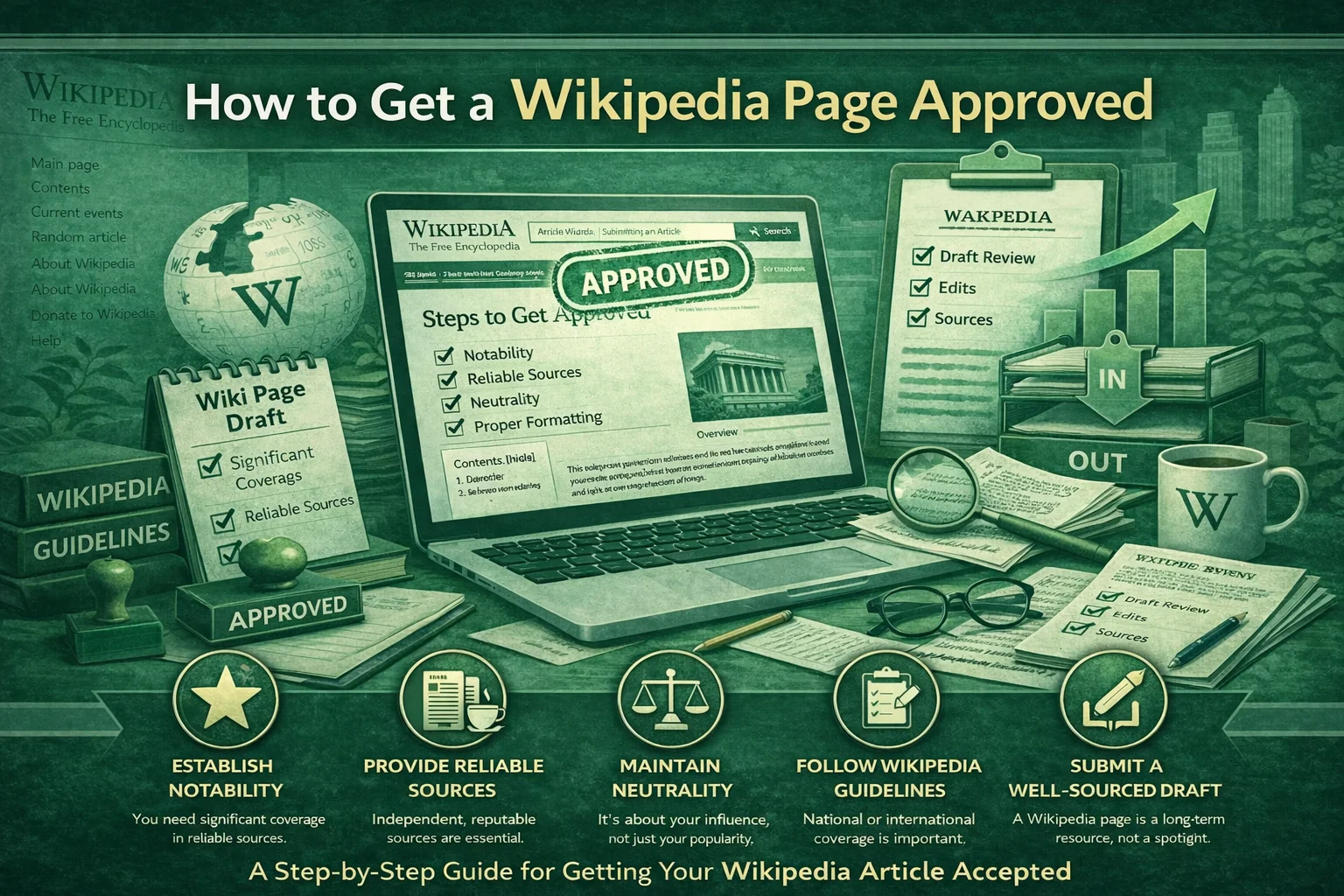
Wikipedia does not rate topics by revenue or number of employees. It assesses them on the basis of documented coverage by independent sources. The entrepreneur should be a subject of multiple substantive reports by journalists or experts. Content you have created on your own site, press releases or interviews you have given do not satisfy this criterion.
Step 1: Make Sure That You Have Reached the Notability Threshold
Prior to getting started, ensure that you meet the basic criteria for notability required by Wikipedia. Not every entrepreneur qualifies for an entry, and the sources should be independent and credible, such as:
- National newspapers
- Leading magazines
- Industry publications
- Television coverage
- Scientific journals
- Credible online media
- Books from established publishers
Press releases, company websites or paid placements will not satisfy this bar.
Consider the following questions:
- Is there any independent source that has written about me?
- Have other journalists written about my work?
- Do I have any awards that I’m known for?
- Have other people written about my contribution to the industry?
Step 2: Setting Up Your Wikipedia Account
Anyone can edit Wikipedia; however, it is strongly recommended to have a registered account.
It allows you to:
- Make an editing history
- Write articles in advance of publication
- Communicate with other editors
- Track any changes to your page
- Establish credibility as a contributor
Editors are more respected if they have previous publications. Before you write a new article, you should edit some of the existing ones.
Step 3: Write From a Neutral Perspective
The worst thing entrepreneurs can do is to use Wikipedia as a marketing website. Wikipedia content should be neutral and factual.
Avoid: “John Smith is one of the best entrepreneurs in the world who revolutionized the high-tech business.”
Rather: “John Smith is an American entrepreneur and founder of XYZ Technologies, a cloud-based software company for small businesses.”
The second version is objective, verifiable and follows Wikipedia’s editorial standards.
Step 4: Structure of the Page
A structured Wikipedia page has a consistent structure:
- Introduction: A summary of the name, field of activity, country of origin, major achievements and profession.
- Early Background and Education: Birthplace (if public), schools attended, degrees received, early experiences.
- Career: Companies founded, jobs held, significant accomplishments, industry impact, mergers, acquisitions and investments, in chronological order.
- Awards and Accolades: Only awards that are verifiable. Don’t include all of the certificates or minor recognitions.
- Publications: Books, papers or citation worthy articles, as appropriate.
- Citations: All factual statements should be cited.
Step 5: Provide Good References
The in-line citations are a key part of Wikipedia’s standards. All major claims (career achievements, awards, company creation, media mentions, education, publications, etc.) should be backed up by an independent source. The higher the quality of the sourcing, the higher the chances of acceptance.
Step 6: Submit Through Articles for Creation
New contributors should not publish their draft directly, but should go through Wikipedia’s Articles for Creation (AfC) process. The submission will be reviewed by volunteer editors and they will send back one of the following:
- Accepted
- Returned with comments
- Rejected
- Rejected because of lack of notability
If revisions are necessary, revise the draft and resubmit.
Step 7: Avoid Common Reasons for Rejection
There are several common issues that are easy to avoid when submitting a business-related submission, such as using promotional language. Don’t use phrases like:
- “The leader in the industry”
- “Most successful entrepreneur”
- “Brilliant founder”
- “Award-winning professional”
- “Well-known expert”
These claims should be deleted if they are not substantiated by independent sources. Writing about yourself also presents a conflict of interest: Wikipedia advises to acknowledge this and refrain from editing your own page directly. Rather, many business owners compose their article and then get it checked by an independent party. Statements that are not supported will be removed by editors.
Step 8: Record Measurable Business Milestones
Credibility is not about claims, it’s about data. Keep a solid track of metrics such as key performance indicators, annual revenue, customer growth, and market share, and rely on trustworthy analytics tools. This information can be made public through updates or annual reports, and will give a clear record to future journalists and researchers to refer to, further enhancing your notability.
Final Thoughts
A Wikipedia page is not a marketing tool, it’s a document of public fact. It can be a lasting sign of credibility and industry presence if used correctly. Doing it as self-promotion will not last through the review.
Focus on good sourcing, neutral language and follow the process. When done right, a Wikipedia page is a permanent, verifiable record of your work.