

Today’s marketing environment is more competitive than ever. Social media, search engine optimization, e-mail marketing, and paid advertising are all methods that are used to earn customers’ trust, visibility, and differentiation. However, one channel that is mostly untapped is Wikipedia.
Wikipedia is still one of the most visited sites in the world and is used daily by millions of people who are looking for accurate information. When done properly, it can be a real marketing tool that is easily measured in scale and visibility.
It’s a publication that is grounded in neutral, factually verifiable information and that is precisely what makes it valuable. This guide outlines how a well-constructed Wikipedia profile can help boost your marketing efforts in 2026 and how to do it properly.
Why Wikipedia Still Matters
AI search is changing the way users discover information and Wikipedia is a key source for AI systems to draw knowledge from when answering questions. However, as the search landscape evolves, a Wikipedia page has the potential to reach your customers before your website.
When a page is properly built, it provides an instant ‘on-the-spot’ credible image:
- Founding date
- Products and services
- Leadership
- Awards and honors
- Significant milestones
- Independent commentary
This entry will be remembered as an anchor point, one that will influence first impressions for a long time after the visitor has left the page.
The Marketing Payoff
The three things that a Wikipedia entry has that other channels don’t are: it ranks, it’s trusted, and it’s permanent. Search engines like it, AI systems use it as a reference and readers believe it is factual and credible, not a sales copy. This is a perfect match for your brand to be present in all the places your prospect might look, and not relying on social media algorithms. Not only is it a click back. It’s the credibility top up you get when someone questions if you’re real.
Credibility By Independent Sourcing
Independent sources are increasingly being used by buyers to consider brands, not corporate messaging. Wikipedia is based on third-party reporting, and that’s the reason why people trust it. If your company is accurately represented by trusted sources, that trust and credibility are passed on to your brand. Not many marketing assets have that impact.
Strengthening Brand Recognition
The names of companies, products and executives can be seen on the first page of Google results on Wikipedia entries. This visibility provides tangible benefits:
- More visibility at the discovery phase
- Increased visibility on search engines
- Increased buyer confidence at the point of decision
A Wikipedia page is not your website, but it is an important part of your organization’s online presence.
Reinforcing Online Reputation
Reputation management relies on accuracy. A Wikipedia page that is well-maintained replaces an outdated or incorrect impression with verified fact, based on:
- Company history
- Key achievements
- Leadership background
- Verified milestones
- Industry recognition
These components create a reliable and dependable public record.
Supporting Content Marketing
Wikipedia is best promoted as a launching pad, rather than a one-stop promotion. Organizations frequently cited in trade publications and industry reports build the credibility that supports a Wikipedia entry meeting acceptance criteria. This is for long-term investment in:
- Original research
- Media relations
- Industry participation
- Subject-matter authority
- Newsworthy initiatives
Improving Visibility in AI Search
Search is moving away from ranked links, towards brief AI-generated explanations based on reliable sources. Whether one organization is cited directly in these summaries isn’t necessarily under control, but organizations with better independent coverage, including Wikipedia, have a much higher chance of being cited in these summaries.
The following are common mistakes to avoid:
Promotional language: Wikipedia is a book of knowledge. Copy that is sales oriented is often taken out and can highlight the whole article for editing.
Weak sourcing: Claims should be based on credible and trustworthy, external resources and not on internal resources.
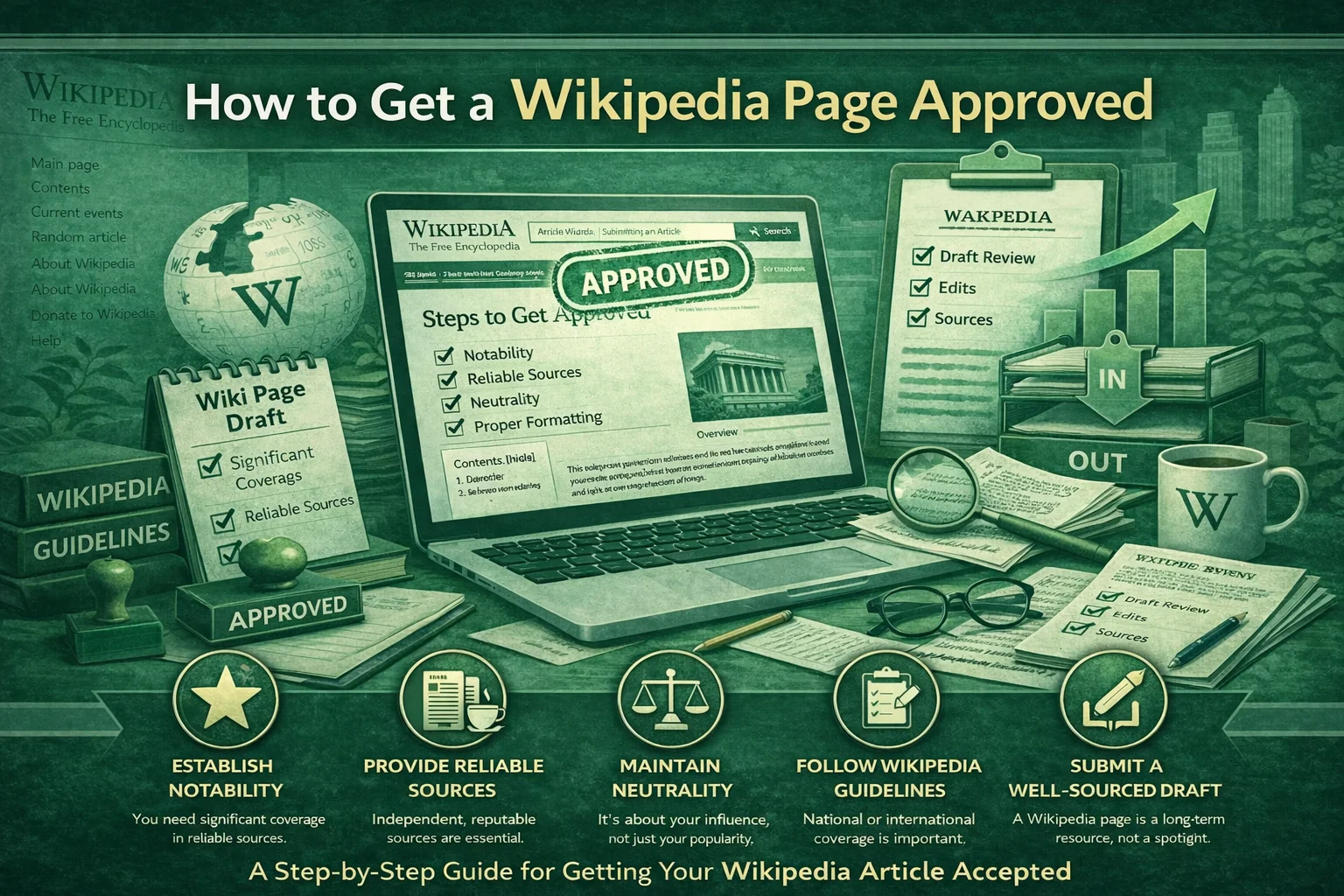
Premature submission: Not all businesses are eligible. An entry has a realistic chance of being accepted for Wikipedia if it has appropriate and significant secondary coverage, which must be independent of the original entry.
Potential conflict of interest: Adding content about your own company is allowed, but it must be made clear that there is a connection and Wikipedia’s guidelines for editing are followed.
If your organization is a good prospect of acceptance, then follow these practices:
- Write factual content, not promotional copy.
- Express things in neutral, well referenced language.
- Use of reliable and up-to-date sources.
- Don’t embellish or misrepresent.
- Use only reliable sources.
- Information about any possible conflict of interest must be disclosed.
- Go through Wikipedia’s editorial process at all times.
This is the way to sustain a credible entry over time.
Should All Businesses Have Wikipedia Pages?
No. Wikipedia is for organizations that have a real and independent coverage, not every company qualifies. Which is why a selected entry is considered valuable.
Conclusion
In the age of discovery spread across AI assistants, generative summaries and traditional search, one of the few assets that can enhance credibility as a marketing value at every touchpoint is a well-crafted and accurate Wikipedia entry – with the caveat that we need to treat Wikipedia in a patient, disciplined and respectful manner that meets its standards.