

Well, let’s face it, it is rather cool to see your name mentioned on the infinite resource – Wikipedia. For authors, having their own Wiki page is not just a sign of success but is a key to visibility, professional recognition, and discoverability for years to come. But here lies the rub: Creating an account and a Wikipedia page is not as easy as one might think: it does not involve merely clicking on the edit tab and freely writing.
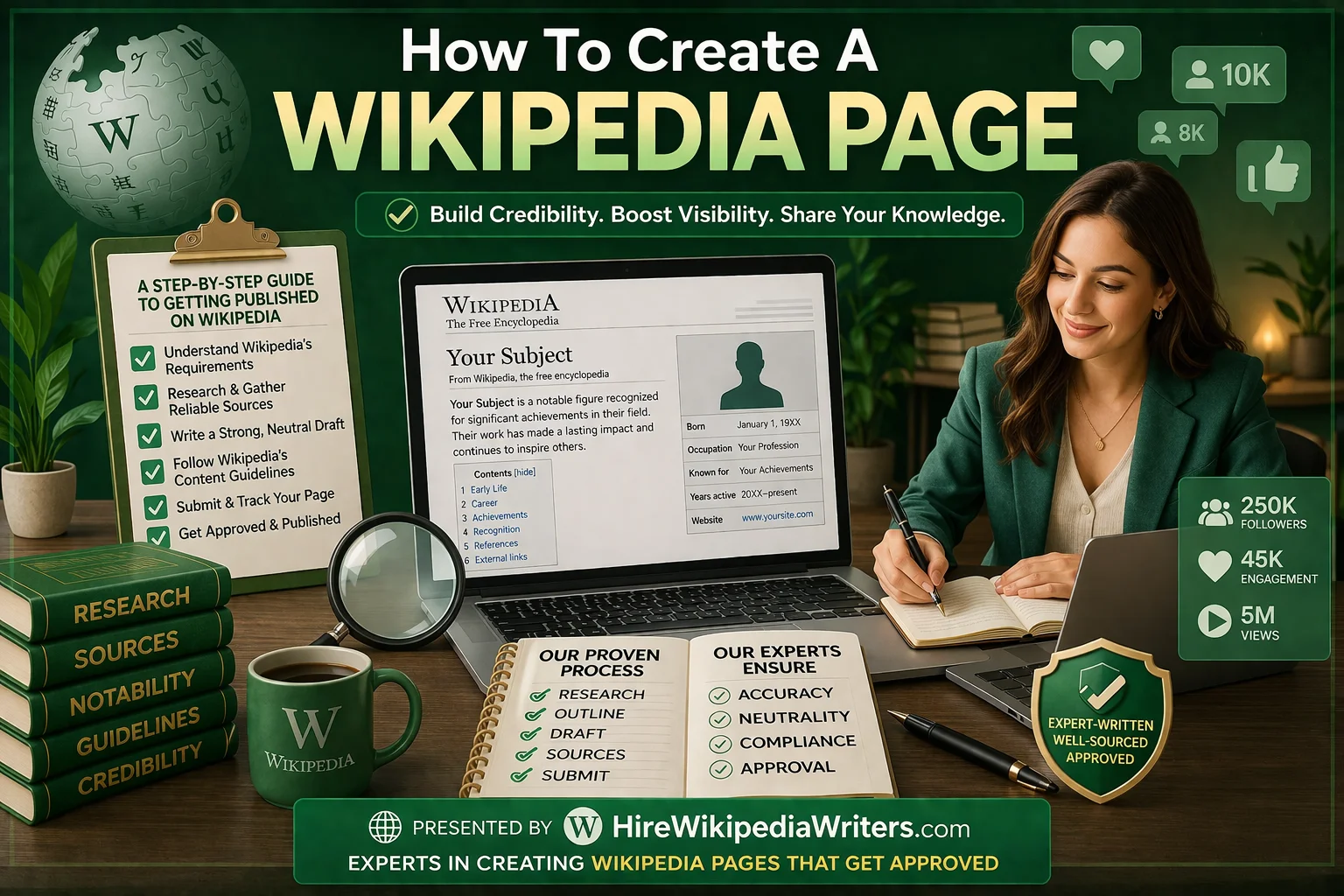
Therefore, if you are asking yourself how to make a Wikipedia page, this article will describe step by step how to go about the process and whether to seek services from paid Wikipedia writers. Let’s dive in.
Why Authors Want a Wikipedia Page
But before going over the details of how this works, let us first look at the reasons behind it. A Wikipedia page can benefit an author in the following ways:
- Get more traffic and visibility for your website
- Establish credibility in your industry
- Direct people and media to the source of relevant information on your work
- Improve your Google search ranking
- Use for speaking engagements, interviews, press releases or media information.
But making a page is much deeper than simply listing your accomplishments—Wikipedia is not a blog, it’s an encyclopedia. And this is where things get a little confusing.
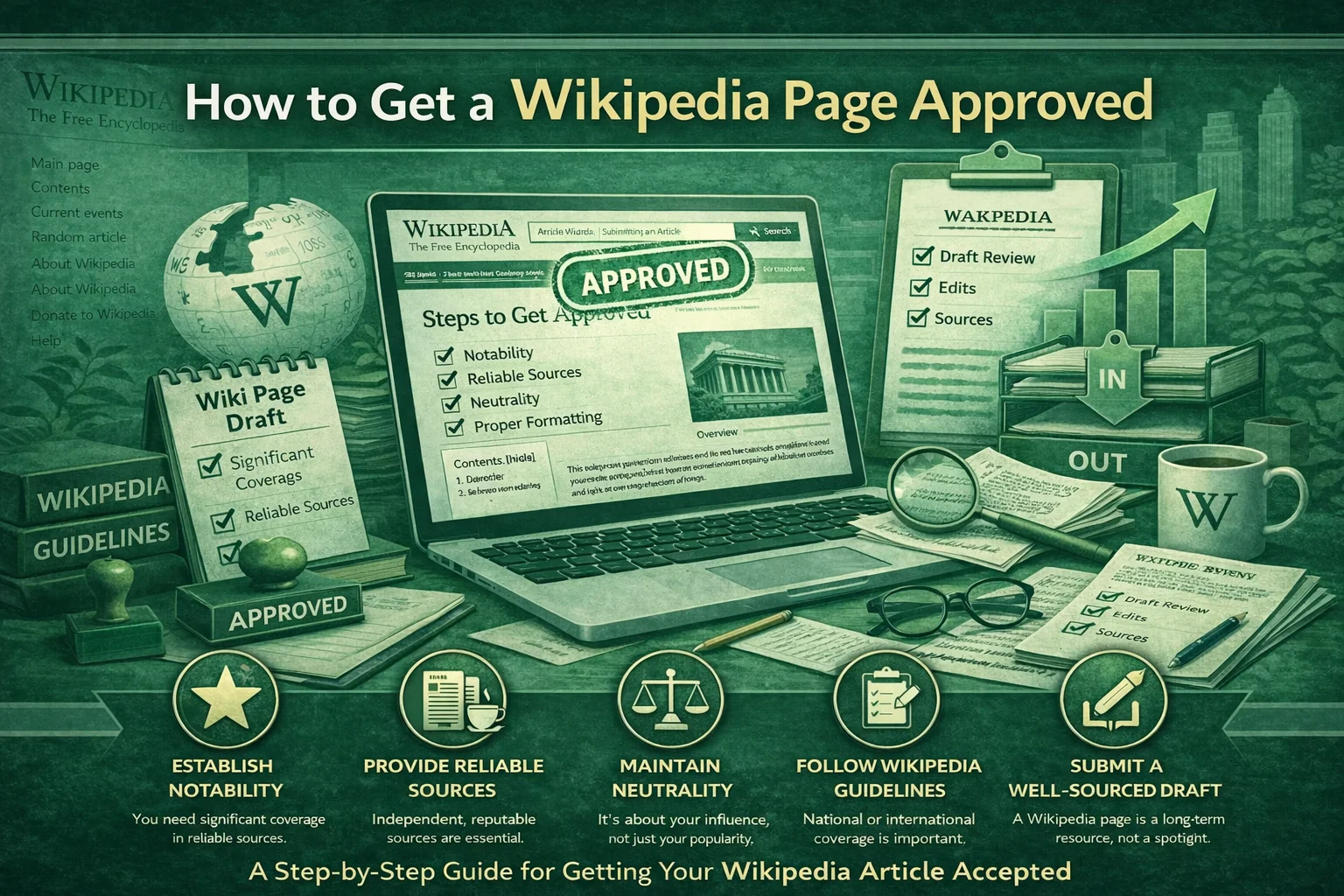
Step 1: Understand Wikipedia’s Notability Criteria
Not every author qualifies for a Wikipedia page. To be eligible, an author must meet Wikipedia’s notability guidelines, which require significant coverage in reliable, independent sources.
That means:
- You’ve been written about in noteworthy publications (think: newspapers, magazines, or trusted websites—not just your own blog).
- Your work has received critical attention, awards, or industry recognition.
- You are not just mentioned—but covered in a way that establishes your importance.
If you’re not quite there yet, don’t worry. Focus on building your media presence and gathering those credible sources.
Step 2: Gather Your Sources and Information
Once you know the author is notable enough, it’s time to collect all relevant information and references. This includes:
- A brief biography (birthplace, education, literary background)
- A list of published works
- Awards or honors
- Media coverage: interviews, articles, features, and reviews from reputable sources
- External links: your official website, author profiles, etc.
Trust is everything on Wikipedia, so every claim you make should be backed by a verifiable citation from a third-party source.
Step 3: Create a Wikipedia Account
As is the case with creating a blog, you cannot perform it anonymously. First, you have to create a Wikipedia account. It is free, and if you have an account, you get the following:
- The action of creating and especially, the possibility of modifying the pages
- A reputation history that assists in creating trust within the community
- Open access to the “Articles for Creation” portal
Tip: Before you create new pages, make some changes on other pages to prove to the community members that you are not a spammer.
Step 4: Draft the Wikipedia Page
Now comes the writing part. This is the point that many get stuck at. Wikipedia has its own style of writing that is unique in tone as well as structured.
- Neutral and objective (no promotional language)
- Written in the third person
- Focused on facts, not opinions
- Accompanied by citations for each proposed statement
This is the reason why many of the authors opt to hire Wikipedia writers, especially those who have an understanding of the approval process of the site. If your page looks and seems like an advertisement, it will be deleted or marked as spam by bots.
Step 5: Submit the Article for Review
If you do not have an established Wikipedia editor account you will be required to go through the Articles for Creation process. Here’s what happens next:
- Volunteer editors will review your page to make sure it meets Wikipedia’s standards.
- They may approve, decline, or request changes.
- The process can take days or even weeks—patience is key!
Step 6: Monitor and Update Your Page
Once your Wikipedia page is live, it becomes part of a living encyclopedia. Anyone can edit it (for better or worse), so it’s a good idea to:
- Monitor your page regularly
- Keep adding new citations and updates
- Avoid overly promotional edits (they might get removed)
Many authors work with ongoing Wikipedia monitoring or consult Wikipedia page creation experts to ensure their page stays accurate and relevant.
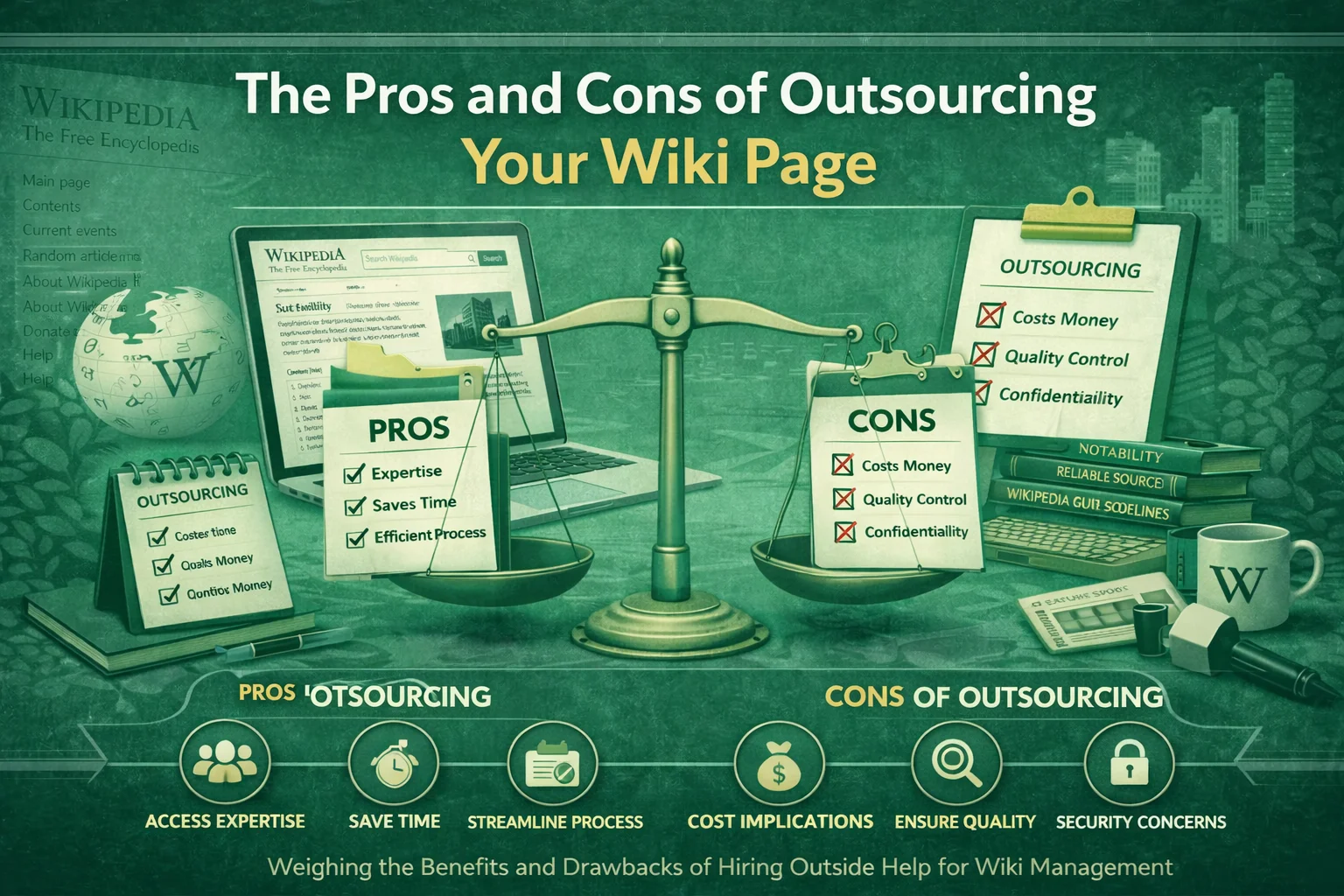
Why Work with Professional Wikipedia Writers?
Let’s face it—Wikipedia can be overwhelming. Between the strict guidelines, editorial tone, and community moderation, even experienced writers can struggle with article creation. That’s why many authors turn to Wikipedia writers who specialize in this area. They know how to create a Wikipedia page that:
- Meets notability standards
- Uses appropriate sources and citations
- Gets approved more efficiently
- Stays live without being flagged for deletion
Final Thoughts
Having a Wikipedia page for an author is always a good idea – but only if it’s done right. From the notability check through composing the text and submitting it to Wikipedia, it requires organizing, research, and a clear understanding of the rules.
If you are determined to start your literary profile on Wikipedia, then you should consider finding Wikipedia writers who will help through the process of creating the page. Partner with Hire Wikipedia Writers to ensure your page meets all Wikipedia guidelines seamlessly.
Every great story created should be specially showcased in the digital platform and now you have all that it takes to do so.